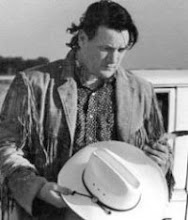
IRAN-CONTRA
Excerpt:
"Midshipmen will not lie, cheat, or steal."
- First seven words of the United States Naval Academy's Honor Code
"There is great deceit, deception practiced in the conduct of covert operations. They are at essence a lie. We make every effort to deceive the enemy as to our intent, our conduct, and to deny the association of the United States to those activities ... and that is not wrong."
- Oliver North
(*refernce the post
HERE for the commentators thoughts on deception in warfare and the Christian position)
James 5:12Above all, my brothers, do not swear—not by heaven or by earth or by anything else. Let your "Yes" be yes, and your "No," no, or you will be condemned.source CONTENTS
THE OCTOBER SURPRISE
ARMS FOR HOSTAGES
REAGAN'S AND BUSH'S INVOLVEMENT
IRAN-CONTRA INDICTMENTS
THE AFTERMATH OF IRAN-CONTRA
THE OCTOBER SURPRISE
The Iran-Contra scandal can be traced to the October Surprise during the 1980 Presidential election between incumbent Jimmy Carter and Ronald Reagan. In the fall of 1980, Carter was marginally leading Reagan in the polls with the election right around the corner. The release of hostages before election day presumably would have insured the election for Carter. The Reagan team conspired to negotiate a deal with Ayatollah Khomeini of Iran. Campaign manager William Casey and George Bush met with Iranian Prime Minister Bani-sadr in Paris in October, only weeks before the election and with Carter having a slight lead over Reagan. Part of the deal cut between the Reagan team and Iran was to provide military weapons which Iran desperately needed in its war with Iraq. As it turned out, the 52 American hostages remained captive in Teheran. Carter's popularity continued to plummet, enabling Reagan to be elected in November, and ironically the hostages were returned at 12 o'clock noon on January 21, 1981 when Reagan was inaugurated.
The first meeting regarding arms-to-Iran occurred in July 1980 in Barcelona, Spain and not in Madrid as was initially reported. The Republican team met at the Hotel Princess Sofia and at the Pepsico International headquarters. The American team was led by Republican campaign director William Casey, who months later was to be named CIA chief by Reagan, and by Robert McFarlane, who later became National Security adviser under Reagan. Three months after Barcelona, a more important meeting took place in Paris. CIA agent Richard Brenneke testified that Bush was in Paris on Sunday, October 19, 1980 when he met with members of the Khomeini regime to consummate an arms package to Iran. Bush, along with Casey and other government officials, flew to Paris on a BAC 111 on Saturday evening, October 18. The plane arrived in Paris on Sunday morning October 19 at 8:40 a.m. European time.
While in Paris, the Republican team gave $40 million to the Iranian government as a gesture of good faith that the Reagan team was serious in dealing with the terrorist Khomeini government -- and that the 52 American hostages should remain captive until after the November election. After the meeting, Bush had to quickly return to the United States in order to deliver a speech at the Washington Hilton Hotel. He departed France in an SR-71 reconnaissance plane, piloted by Gunther Russbacher. The plane was refueled by an Air Force tanker nearly 2,000 miles out of Paris. The entire return flight to the United States was less than two hours.
When news of the Paris meeting leaked out, the CIA moved quickly to cover-up Bush's meeting. CIA agent Frank Snepp wrote an article in the Village Voice, stating that the SR-71 pilot, Gunther Russbacher, was not capable of flying an SR-71 and, therefore, his allegations were false. However, in an interview between government whistle-blower Rodney Stich and Russbacher, it was very clear that Russbacher had been trained in flying the SR-71.
Several other witnesses corroborated the story that Bush was present in Paris. Ari Ben-Menashea, a member of Israel's Mossad and involved in the transfer of arms to Iran, stated that Bush was at the meeting. Also, Iranian Prime Minister Bani-sadr produced documents indicating that Bush was present. On the other hand, CIA agent Donald Gregg, who was on the flight to Paris, failed a polygraph test when asked about Bush's presence.
The Secret Service unequivocally denied the fact that Bush was in Paris. Yet, the agency refused to allow any of its agents who were assigned to Bush at that time, to testify. Justice Department prosecutors called two Secret Service agents who swore that Bush was in Washington, D.C. on that weekend. The Secret Service claimed that Bush was in Pennsylvania on Saturday, October 18; however, the agency did not produce any evidence to indicate Bush's activities on the following day.
Under pressure by the Republicans, both the House and the Senate initially refused to investigate the October Surprise. However, eventually in 1991, the Senate Foreign Relations Committee made a token gesture and superficially did look into allegations of improprieties. The investigation was virtually blocked, since the committee prevented investigators from traveling to Europe to interview witnesses; denied subpoena power to investigators; limited the time frame of the investigation; and limited the funds to investigate alleged illegalities.
In addition, the committee called Russbacher an imposter and refused to accept his sworn statements. The testimony of Brenneke was discredited. The committee claimed that he was in Portland, Oregon on the weekend of the October 19, 1980, since he had used his credit cards on that day on the west coast. However, Barbara Honegger, a member of the Reagan-Bush campaign team and one who claimed that Bush was in Paris on October 19, reported that a handwriting expert examined the credit card signatures and swore that they were not those of Brenneke.
A year after the Senate's "investigation" of the October Surprise, the House October Surprise Committee, chaired by Lee Hamilton of Indiana, was formed. However, chief counsel Lawrence Barcella, Jr. lacked credibility, since he earlier helped to conceal clandestine CIA operations in Libya. Also, Richard Pedersen, another key member of the investigation committee, had been involved in corruption. The House committee followed the pattern of its counterpart in the Senate and refused to hear testimony from anyone who had evidence that Bush was in Paris on the weekend of October 19, 1980. In 1993 the committee issued its final report which mirrored that of the Senate committee: the October Surprise was fabricated.
If the October Surprise did indeed occur, there would have been potential enormous consequences: the possibility of impeachment of high level government officials, including members of Congress; criminal activities of Republican Party nominees Reagan and Bush; and the exposure of illegal CIA activities.
Five months after the October Surprise and two months into his first term, Reagan gave CIA chief Casey the green light to begin clandestine activities to attempt to overthrow the Nicaraguan Sandinista government. For three years the Contras only killed innocent Nicaraguans and were incapable of seizing any villages. This frustration, coupled with the American public's opposition to Reagan's dirty war, influenced Congress to cut off aid to the Contras.
ARMS FOR HOSTAGES
"Since United States contact with Iran, there's been no evidence
of Iranian government complicity in acts of terrorism against
the United States."
- President Ronald Reagan, November 13, 1986
In 1984, the CIA chief for the Middle East, William Buckley, was kidnaped by the Hezbollah which was operating out of Iran. Close sources to Reagan confirmed that he would do anything to obtain the release of Buckley. However, he was murdered several months later. This was followed by more abductions: Benjamin Weir, Father Jenco, Terry Waite, assistant to the Archbishop of Canterbury, and several professors from the American University in Beirut. The CIA and the National Security Council now moved to attempt to negotiate with Iran.
The NSC was composed of Vice President Bush, Secretary of State George Shultz, Secretary of Defense Caspar Weinberger, CIA director William Casey, Lieutenant Colonel Oliver North, and National Security adviser Robert McFarlane. On June 7, 1985, the NSC was given permission to deal with Iran which could exert pressure on the Hezbollah to release the American and British hostages.
The secret funding of arms, which was sold to "moderate Iranians," was orchestrated primarily by North. Then the profits from the sales were used to send more weapons to the Contras in Central America. North controlled the secret and illegal treasury which financed "the Enterprise." This consisted of CIA agents turned arms merchants, dummy CIA corporations, and clandestine Swiss bank accounts. The Enterprise took in $48 million in cash. Some was pocketed by arms dealer Albert Hakim and by General Richard Secord. Some of the money was funneled into the Middle East to pay for North's failures in attempting to liberate the American hostages in Beirut.
Soon after the NSC was given permission to communicate with the Iranian regime, six separate arms deals took place.
**August 1985. 96 TOW missiles but no hostages were released. A DC-8 flew from Israel to Iran and transferred $1,217,410 into the Swiss bank account of arms dealer Ghorbanifar.
**September 1985. 408 TOWs were sold to Iran. One American hostage, Benjamin Weir, was released a day later.
**November 1985. 18 Hawk missiles were shipped to Iran via a Portugal and Israel. North arranged for the transfer of one million dollars which was placed into the bank account of Lake Resources, a CIA operated front to launder money in Florida. 80 Hawks were to be delivered; however, 62 were never delivered. North and Secord testified later that the money received covered the payment for the aircraft. $150,000 was actually spent for transportation, and $850,000 was diverted to the Contras.
**February 1986. 1,000 TOWs were sent to Iran in increments of 1,000 each and at $10,000 per missile. $10 million was placed in the account of Lake Resources. $3.7 million was used to pay for the TOWs. Of that amount, $6.3 million was profit.
**May 1986. $16.5 million was paid to the United States for spare parts for Hawk missiles. $6.5 million was given to the government, and $10 million was deposited in the bank account of Lake Resources. Two months later on July 26 Father Lawrence Jenco was released, and the remaining Hawk parts were sent on to Iran.
**October 1986. 500 TOWs were sold to Iran, David Jacobsen was released. $3.6 million was given to the United States. $2 million was paid for the missiles, while $1.3 million became profit.
On November 25, 1986, after a Lebanese newspaper broke the story of arms-for-hostages, Attorney General Edwin Meese revealed that illegal funds had been diverted to the Contras. Reagan downplayed the weapons which were delivered to Iran. He stated that TOW missiles were "hand held" and that they all could be "transported in one cargo plane." Reagan also asserted, "The TOW anti-tank missile is a purely defensive weapon. It is a shoulder-carried weapon. And we don't think that in this defensive thing -- we didn't add to any offensive power on the part of Iran." The TOW missile weighed 56.3 pounds and was four feet long. The complete system required a crew of four people. In addition, TOWs could be used offensively by Iran to attack Iraqi tanks.
It took several days before North's White House office was sealed, so he and his secretary, Fawn Hall, were able to shred damaging papers in this time period.
Reagan attempted to convince the public that his administration was not dealing with Khomeini but with "moderate elements" within the country. Reagan sent both McFarlane and North on a goodwill trip to Teheran to meet with Khomeini and to present him with an autographed Bible and a cake in the shape of a Bible. The Khomeini government refused to allow them to meet with anyone, and they only waited on the Teheran tarmac for several hours before returning to the United States. Because McFarlane's frustration level increased and because he continued to wrestle with the unethical American covert operations, he resigned as Reagan's NSC adviser and was replaced by Navy Admiral John Poindexter.
The next year, a joint Congressional hearing was created to investigate Iran-Contra. The committee granted immunity to North, thus forcing him to testify. North bragged that the United States carried out an illegal covert operation to fund the Contras in Central America. Since the Boland Amendment prohibited the funding of the Contras in their effort to overthrow the leftist Sandinista government in Nicaragua, the NSC sought other avenues. The first was to convince Congress to allocate funds for "humanitarian aid." However, this money was used illegally to arm the Contras and was terminated after several months. Therefore, the NSC had to look for other sources of funds.
North testified that he took it upon himself to carry out "Operation Democracy." He boasted that the profits from the illegal arms sales to the Khomeini regime were placed in secret Swiss bank accounts and that dummy CIA fronts such as Lake Resources in Florida. These funds were used to purchase weapons with which to arm the Contras in Central America. This was carried out by North along with Hakim, Secord, and Singlaub.
North skimmed $50,000 from a secret cash account which was set up by the Contras. Secord helped arrange for weapons which were illegally obtained with profits from the sales to Iran and then shipped south to the Contras. Hakim was a military sales agent who worked as a middleman with Secord. Hakim was quoted after President Carter's aborted hostage rescue in Iran in 1979: "He couldn't have been happier when the Carter administration needed." Air Force General John Singlaub, who was president of the World Anti-communist League, became involved in raising funds overseas for the Contras in 1981.
On the domestic front, North solicited donations from various wealthy people. Claiming that communism was entrenched in Nicaragua and that it would move northward, he was able to solicit $80,000 from Adolph Coors. An $80,000 Cessna spotter plane, to be used in flights over Nicaragua, was purchased. North called wealthy widows, promising them photo sessions with Reagan if they made large contributions. One wealthy woman contributed $200,000 and was rewarded with a five minute meeting with Reagan. Billionaire Ross Perot supplied $2.3 million to North in an attempt to liberate Beirut CIA station chief Buckley in Lebanon. The sultan of Brunei contributed $1 million, and King Fahd of Saudi Arabia turned over $32 million.
North also lost more than $400,000 chasing false leads. An Iranian convince North that he was a Saudi prince with superior intelligence connections and was paid $15,000. An Armenian informant claimed that he knew the secret location of the American hostages. North slipped him $100,000, and he immediately disappeared in Syria. Lebanese "informants" received over $100,000 from North. Another Lebanese claimed that he had contacted Buckley, but it later turned out that Buckley had long been dead when he and North communicated. North also arranged for another informant to receive $200,000 of Perot's money and $11,000 from illegal Contra funds in exchange for information. This informant produced no information to North.
"Midshipmen will not lie, cheat, or steal."
- First seven words of the United States Naval Academy's Honor Code
"There is great deceit, deception practiced in the conduct of covert operations. They are at essence a lie. We make every effort to deceive the enemy as to our intent, our conduct, and to deny the association of the United States to those activities ... and that is not wrong."
- Oliver North
"In the United States Naval Academy, nobody taught me how to run a covert operation."
- Oliver North

This illegal financing -- to operate an illegal war in Nicaragua -- allowed a clandestine arm of the government to run itself. North was not accountable to anyone or to any agency. This was a direct assault on the American constitutional system. The laws of the United States were ignored and broken by a continuous series of lies. Presumably North believed that he was waging a war against the Sandinistas and many members of Congress.
REAGAN AND BUSH'S INVOLVEMENT
BUSH SEEMS TO LOSE HIS MEMORY. Plans to fund the Contras originally emanated from the office of the vice president. In the summer of 1982 Bush and Casey launched the Black Eagle Operation, a plan to ship weapons to the Contras through San Antonio, Texas and then on to El Salvador and Panama. According to a CIA operative, Bush agreed to use his office as a cover after Donald Gregg became the NSC adviser and coordinated the logistics of the operation.
Bush always claimed that he was "out of the loop" in the Iran-Contra scandal as well as the CIA's involvement in drug trafficking while he was vice president. Plans to fund the Contras originally emanated from the office of the vice president. In the summer of 1982 Bush and Casey launched the Black Eagle Operation, a plan to ship weapons to the Contras through San Antonio, Texas and then on to El Salvador and Panama. According to a CIA operative, Bush agreed to use his office as a cover after Donald Gregg became the NSC adviser and coordinated the logistics of the operation.
In December 1983, Bush flew to Panama to meet with Noriega. This encounter was interpreted by Noriega as an appeal in training and arming the Contras. Jose Blandon was the top political aide to Noriega. When subpoenaed before the Senate investigating committee in 1988, Blandon testified that Bush asked for and received a commitment from Noriega to help secretly arm, train, and finance the Contras. In North's 1989 trial, more evidence surfaced about the Bush-Noriega Contra connection. A Costa Rican-based Contra leader testified that he received $100,000 from Noriega in July 1984. Bush continued to plead ignorance about Noriega's drug dealing activities. Blandon confirmed that the CIA used Noriega to funnel guns and money to the Contras and that Panama was used as a training base.
After the Boland Amendment outlawed further shipments of weapons to the Contras, the "Supermarket" began to covertly fly in weapons which were purchased with private funds. Bush always pleaded innocence, maintaining that he was never aware that funds were solicited from private individuals to purchase weapons for the Contras. However, a large amount of evidence indicated that Bush knew the precise details of how the "Supermarket" raised money and bought arms.
NSC adviser Gregg served in Vietnam with Felix Rodriquez, and later both worked in American intelligence. Rodriquez was recruited by Gregg to help supply the Contras with weapons. On September 18, 1984, Gregg claimed that he sent a memo to Bush, explaining the military and political aspects of the war. Gregg said that he told the vice president that the "Supermarket" was providing the Contras with about $1.5 million from private sources.
Telephone records proved that Gregg made a number of telephone calls from his home to the White House on December 15. Bush's office officially acknowledged that Gregg and Rodriquez discussed Contra aid. The statement said that Gregg communicated with Rodriquez, but that they were never involved in directing, coordinating, or approving military aid to the Contras. Bush insisted that these contacts concerned weapons to El Salvador and not to the Contras.
On February 25, 1985, Poindexter wrote to Bush: "We want the VP (Bush) to discuss the matters with (Honduras President Roberto) Suazo." On March 16, Bush flew to Tegucigalpa and met with the president and promised him that the United States would increase military aid to Honduras in return for helping support the Contras. Suazo was close to telling the White House that he would soon evict the Contras from Honduras. Bush assured the president that he would be rewarded if he would permit Contra camps in his country and if he would help to supply them with weapons.
White House aid to Honduras began almost immediately after Bush's visit. Yet Bush categorically denied that he cut a deal with Suazo. The vice president said, "No implication, no quid pro quo, direct or indirect, from me to the president of Honduras."
As vice president, Bush was a member of the NSC. He attended at least six documented meetings between May and October of 1986 and a total of at least 24 meetings in the 1980s. The arms-for- hostages plan was undoubtedly the primary agenda item at these meetings. One of the first meetings to discuss the plan to sell arms to Iran in exchange for American hostages held by the Hezbollah was on August 6, 1985. Bush was present when National Security adviser McFarlane outlined a scheme to attempt to retrieve the hostages.
Weinberger contended that Bush supported the arms-for-hostages, while he and Secretary of State George Shultz opposed the idea. Weinberger stated: "President Reagan decided to go with Israeli-Iranian offer to release our 5 hostages in return for the sale of 4,000 TOWs (anti-tank missiles) to Iran by Israel." Weinberger's notes read: "George Shultz + 1 opposed - Bill Casey Ed Meese (Attorney General) + VP favored." Weinberger's notes told of a straightforward swap of weapons for hostages: "Our 5 hostages in return for sale of 4,000 TOWs."
Bush conceded that he supported the sale of arms but did not realize that it concerned the release of American hostages. Bush consistently said that he was "out of the loop." In addition, he stated that Israel was not a third party in sending some arms to Iran.
After Reagan authorized the sale of arms to Iran on January 6, 1986, Shultz and Weinberger expressed their opposition. Weinberger confirmed that Bush was present at a White House meeting on the following day. The two cabinet members later testified to the Tower Commission that they disagreed with both Reagan and Bush on the arm' sales. A few weeks later John Poindexter, the successor to McFarlane as National Security adviser, sent a memo to North acknowledging the high level opposition to the arms-for-hostages: "President and V.P. are solid in taking the position that we have to try."
More evidence implicated Bush with the illicit funding of the Contra war after the Boland Amendment terminated congressional dollars. Ramon Milian Rodriguez, who served as the chief financial officer of the Medellin cartel, stated that Bush had connections with the Colombia cartels. Rodriguez informed Gregg in April 1986 that North was skimming profits from the arms sales. This directly implied that Gregg was aware of the efforts of North to arm the Contras. Yet Gregg maintained that he never informed Bush about the operation. The next month, Colonel Samuel Watson, an assistant in the NSC, met with Bush and Gregg to discuss the status of the Contras. The vice president was briefed on the status of the war, including the resupply network for the Contras.
On July 29, 1986, Bush met with Amiram Nir, Israel's adviser on terrorism, at Jerusalem's King David Hotel. Bush's aide, Craig Fuller, took notes that explained that Nir hoped to gain the release of the hostages. According to Fuller, they discussed whether the arms destined for Iran would be delivered in separate shipments for each hostage as they are released. Bush later said that he could not recall much about the briefing and that he did not fully understand what Nir was referring to when he was talking about Iranian radicals. Bush said that he merely listened to Nir and that he did not know any details of the arms-for-hostages swap.
At his deposition during the Iran-Contra hearings, Contra leader Pastora testified that Bush was in the Contra resupply chain of command. Furthermore, records showed that after CIA operant Eugene Hasenfus' was shot down over Nicaragua in October 1986, his first telephone call was made to the vice president's office.
Despite the overwhelming evidence indicating that Bush was at several meetings where there were conversations concerning the arms-hostages swap, Bush continued to say that he was unaware of what transpired Even after the media broke the story, the vice president continued to maintain that he had been oblivious to the fact that illegal funds were being diverted to the Contras. Bush claimed that he had been informed by the Senate Intelligence Committee until a month later. The vice president contended that the entire operation to resupply the Contras was carried out privately and that no one in the White House was privy to process.
At the end of the Reagan administration, the Sandinista government still survived. Two years after Bush was elected president, Nicaragua was readying itself for the another election. The Bush administration pumped in $9 million to the 1990 election campaign of Violetta Chamorro. This is the equivalent of an enemy country spending $2 billion on an American election. It took Chamorro and 14 other parties to form the UNO coalition, and they barely defeated Daniel Ortega's Sandinista Party. This brought to a close the 11 year war which cost the lives of more than 30,000 Nicaraguans. Most of the war's casualties were civilians, since the goal of the Contras was to break the morale of those people. The United States government spent $300 million on the Contras, and private contributions never were totally accounted for. And the United States was able to sustain $15 billion in damage to Nicaragua's infrastructure.
THE CHRISTMAS EVE PARDONS. In late 1992 -- with only a month remaining in Bush's presidency -- Iran-Contra once again resurfaced. Bill Clinton had just defeated him in November in his bid for a second term. Reagan's secretary of defense, Caspar Weinberger, was soon to be indicted for his part in Iran-Contra. Bush only had two months remaining before he would leave office. And Walsh was in his fifth year of investigating the players involved in Iran-Contra. Bush himself was well aware that there was a chance that he, too, could be subpoenaed to appear before a grand jury and perhaps be indicted.
C. Gordon Gray Reagan's White House counsel for eight years, also served as Bush's personal lawyer in those same years when he was vice president. In December 1992, Gray recommended that Bush pardon Weinberger as well as other Iran-Contra figures. If Bush pardoned only Weinberger, Gray believed, that would make it suspicious that the president would be covering himself. After all, Weinberger's diary was in the hands of the independent counsel, and it contained evidence which could have implicated Bush. Additionally, possible personal testimony could also damage Bush's credibility, since he had vehemently denied any role in Iran-Contra. Gray believed that all the high level Iran-Contra players should be pardoned. He believed that this would shield Bush from the charge that he was attempting to bring Iran-Contra to a swift conclusion so that he himself could never be implicated. The president had been convinced to go ahead and pardon Weinberger and other Iran-Contra figures who earlier had been convicted.
Gray contacted six high level officials who had been convicted of Iran-Contra crimes in order to see if they would accept a presidential pardon. Two CIA officials as well as former NSC adviser Robert McFarlane and former Assistant Secretary of State Elliot Abrams agreed to a pardon. Gray helped Bush write a three page memo explaining the purpose of the pardons. Bush said that "the five have already paid the price -- in depleted savings, lost careers, anguished families -- grossly disproportionate to any misdeeds or errors of judgment they may have committed."
On Christmas Eve, December 24, Bush issued the pardons. The president stated that Weinberger had been pardoned "not just out of passion or to spare the 75 year old patriot the torment of a lengthy and costly legal proceeding, but to make it possible for him to receive the honor he deserves."
Bush then hired Griffin Bell's law firm of King & Spaulding to investigate himself. After only three weeks, King & Spaulding issued its findings: Bush was not implicated in any wrong-doings in Iran- Contra. King & Spaulding did in three weeks what Walsh had begun seven years before. Even though Walsh was not finished with his probe, the Christmas Eve pardons brought the Iran-Contra investigation to a conclusion. Walsh was angry.
REAGAN'S MEMORY ALSO FAILS. Reagan attended four NSC meetings, but he also contended that he knew nothing of illegal arms shipments to Iran and illegal weapons sales to the Contras. In November 1986, a Beirut newspaper broke a story which explained that American arms sales to Iran.
A month earlier on October 8, 1986 Reagan was asked at a news conference: "Was there any United States involvement in this fight over Nicaragua -- carrying the arms -- any involvement whatsoever?" Reagan replied: "I'm glad you asked. Absolutely not. While they (three Americans, including Eugene Hasenfus) there is no government connection with that at all." Then after the Reagan administration acknowledged that the United States was selling weapons to Iran, Reagan stated on November 19, 1986: "To eliminate the widespread but mistaken perception that we have been exchanging arms for hostages, I have directed that no further sale of arms of any kind be sent to Iran." Reagan was then asked, "Didn't the United States condone shipments of arms to Israel and other nations?" Reagan denied this charge by saying, "We did not condone and do not condone the shipment of arms." Then Reagan was asked, "Could you explain what the Israeli role was here?" Reagan's response was, "No, because, as I say, have had nothing to do with other countries or their shipment of arms."
On December 8, 1986, Reagan stated, "Let me just say it was not my intent to do business with Khomeini to trade weapons for hostages, nor to undercut our policy of anti-terrorism." On March 26, 1987 Reagan stated: "With regard to whether private individuals were giving money to support the Contras, yes, I was aware that there were people doing that. But there was nothing to my knowledge, of anyone whom I was aware of." Two days later Reagan said, "As a matter of fact, I was definitely involved in the decisions about (private) support to the freedom fighters. It was my idea to begin with."
Reagan told the Tower Commission that he "approved the shipment of arms by Israel to Iran" but later said that he was "surprised that Israelis had shipped arms to Iran." Then he said that he had incorrectly remembered both instances.
In his 1990 autobiography, Reagan wrote: "To this day I still believe that the Iran initiative was not an effort to swap arms for hostages. But I knew that it may not look that way to some people. Unfortunately, an initiative meant to develop a relationship with moderate Iranians and get our hostages home took on a new shape I never expected and was never told about."
"Mistakes were made and I tried to rectify them, first by appointing the Tower board to investigate,
then by reorganizing the National Security Council so that no one there could ever again take it upon himself to set foreign policy. In time, my ranking in the opinion polls rose. However, that never made me feel happy as some might think; it was as if Americans were forgiving me for something I hadn't done."
"If I could do it over again, I would bring both of them into the Oval Office and say, ‘OK, John (Poindexter) and Ollie (North), level with me. Tell me what really happened and what it is that you have been hiding from me. Tell me everything.' If I had done that, at least I wouldn't be sitting here writing this book still ignorant of some of the things that went on during the Iran-Contra affair."
In November 1986, Reagan explained the TOW missile sales: "The modest deliveries could easily be put into a single cargo plane." He also stated that the TOW missiles could be hand-held. Additionally, Reagan denied that Israel was used as a third country to help deliver arms to Iran. John Tower was appointed by Reagan to head a commission to investigate Iran-Contra. In less than a year the Tower Commission exonerated Reagan of any wrong-doing. In 1989 newly elected President Bush appointed Tower to be his Secretary of Defense. Knowing that the Senate would not confirm his appointment because of allegations of womanizing and alcoholism, Tower withdrew his name, since it was impossible for him to receive a majority vote in the Senate.
Reagan ignored the warnings that he was waging an illegal and inhumane war. Instead he decided to put his men to work, cutting deals with right wing dictators in order to finance the Contras in exchange for drugs.
IRAN-CONTRA INDICTMENTS
It is not a crime to deceive the American public as high officials in the Reagan Administration for two years while conducting the Iran and Contra operations. However, it is a crime to mislead, deceive, and lie to Congress when Congress seeks to learn whether administration officials are conducting the nation's business in accordance with the law. Lawrence Walsh was hired as a special prosecutor to determine precisely if this had occurred. He subsequently found several upper-level Iran-Contra participants in violation of the law.
Several American laws were defied:
- The National Security Act. Select committees in both houses must be informed of all intelligence gathering by the CIA.
- The Hughes-Ryan Amendment (1974). The CIA may only use funds which are intended for obtaining necessary intelligence. The CIA must brief at least eight separate Congressional committees in regard to any covert action other than simple intelligence gathering.
- The Boland Amendment (1984). The United States cannot use funds to support any military operations in Nicaragua unless appropriated by Congress.
- The Neutrality Act (1794). It is illegal to initiate, organize, and/or provide money for military action against any foreign country which the United States is not officially at peace with. The United States had officially severed diplomatic relations with Iran which had been officially branded a terrorist nation.
At the Iran-Contra trials, North was found guilty of altering and destroying documents, accepting an illegal gratuity, and aiding and abetting in the obstruction of Congress. He was sentenced to a three year suspended prison term and two years probation and was fined $150,000. Ironically, North was given 1,200 hours community work to help young people with drug problems in Washington, D.C. However, since North had been given Congressional immunity when he testified, his convictions were overturned by an appeals court in July 1990 by a two-to-one vote.
Caspar Weinberger was charged with withholding and concealing notes; lying about his knowledge of illegal Saudi Arabian contributions and lying about the existence of such notes; as well as perjuring himself twice by denying knowledge of Israeli arms sales to Iran and the need to supply Israel with arms it sold to Iran.
Major General Richard Secord, who helped arrange illegally purchased arms for the Contras, pleaded guilty to making false statements to the Iran-Contra committee. He was sentenced to two years probation.
Richard Miller, who headed a Washington public relations firm, pleaded guilty to conspiracy and to withholding information from Congress. He was given two years probation. Carl (Spitz) Channell, a conservative fund raiser, pleaded guilty to conspiring to defraud the United States government. He was sentenced to two years probation.
Former National Security adviser John Poindexter was convicted of five felonies involving conspiracy, obstruction of Congress, and making false statements. He was sentenced to six months in prison.
Robert McFarlane pleaded guilty to withholding information from Congress. He was sentenced to two years probation and fined $20,000 and ordered to perform 200 hours of community work.
Clair George, former deputy director of the CIA, was charged with ten counts of perjury. He was convicted on two charges. Elliott Abrams, deputy Secretary of State to Central America, pleaded guilty to withholding information from Congress. He was sentenced to two years probation and 100 hours community work.
Albert Fiers, part of the CIA's Central American task force, pleaded guilty to two misdemeanor charges as part of the deal to cooperate with special prosecutor Lawrence Walsh's investigation.
Albert Hakim, a California arms dealer in sending illegal arms to the Contras, pleaded guilty to a misdemeanor for supplementing North's salary. As a large shareholder in Lake Resources, he pleaded guilty to the theft of government property, and illegally shipping arms to the Contras. He was sentenced to two years probation and fined $5,000.
Thomas Clines, CIA official, was found guilty for under reporting his earnings to the IRS between 1985 and 1988. He also received illegal profits in Iran-Contra.
Other high level White House officials were unscathed. Chief of Staff Donald Regan was not implicated, even though he had participated in top secret meetings which dealt with the illegal sale of arms to Iran. CIA director William Casey who directly organized and orchestrated the covert Contra war died before any charges were brought against him.
Before special prosecutor Walsh completed his investigation, President Bush issued the Christmas eve pardons in 1992, just weeks before he was to leave office. This made it virtually impossible to convict anyone including Bush himself. He issued pardons to Casper Weinberger, Elliott Abrams, Robert McFarlane, Alan Feiers, Clair George, and Duane Clarridge.
In July 1989, North and other Iran-Contra leaders were barred from Costa Rica on an order by President Oscar Arias. He acted on recommendations from a Costa Rican congressional commission investigating drug trafficking. The commission concluded that the Contra re-supply network in Costa Rica which North coordinated from the White House doubled as a drug smuggling operation. The Costa Rican government also barred Major General Secord, National Security Advisor Poindexter, United States ambassador Tambs, and CIA station chief Joseph Fernandez from its borders.
The Costa Rican narcotics commission started probing the Contra network centered around the northern Costa Rican ranch of CIA operative John Hull. North's personal diary mentioned "the necessity of giving Mr. Hull protection." Investigators held North responsible for Panama President Noriega's participation in the Contra supply network. The commission confirmed information about the Contra-drug connection from independent journalists, lawyers, and the United States Senate subcommittee. Ollie North's notebooks contained dozens of references to Contra-related drug trafficking, including a July 12, 1985 entry: "$14 million to finance (arms) came from drugs." (San Juan Star, Puerto Rico, July 22, 1989; Tico Times, Costa Rica, July 28, 1989)
During the United States' ten-year Contra war, the government failed to overthrow the Sandinistas and to bring back a capitalistic dictatorship to Nicaragua. The Reagan and Bush administrations fought against the people of Nicaragua instead of waging war against poverty. The war and the Iran-Contra probe, the latter of which began in 1986, finally came to a halt in 1992 with the Christmas eve pardons. In these years, the White House was incapable of eliminating a democracy based on Marxist principles, while on the home front the American judicial system failed as well. High-ranking officials, going all the way to the Oval Office, received minuscule sentences or no punishment at all.
THE AFTERMATH OF IRAN-CONTRA
- February 26, 1987: The Tower Commission issued its report on Iran-Contra, reprinting hundreds of notes exchanged by McFarlane, Poindexter and North.
- January 19, 1989: On the last day of the Reagan presidency, the National Security Archive filed a series of Freedom of Information Act (FOIA) requests together with a lawsuit against President Reagan, to prevent the imminent erasure of the White House electronic mail backup tapes. On the eve of Bush's inauguration, District Judge Barrington D. Parker issued a Temporary Restraining Order, prohibiting the destruction of the backup tapes to the PROFs system.
- September 15, 1989: United States District Judge Charles B. Richey ruled that the National Security Archive and its co-plaintiffs, including the American Historical Association (AHA) and the American Library Association (ALA), have standing to sue President Bush, in order to force him to comply with the retention requirements of various records acts which potentially cover the White House e-mail.
- January 25, 1991: After one and one-half years of legal procedural wrangling, the Court of Appeals for the District of Columbia Circuit upheld Judge Richey's ruling, denying the Bush administration's attempts to have the case dismissed.
- December 1, 1998--November 20, 1992: On request from the plaintiffs, Judge Richey added the White House e-mail from the lame duck Bush administration to the case, issuing a restraining order preventing the Bush White House from destroying its own backup computer records.
- January 6, 1993: Judge Richey ruled that computer tapes containing copies of e-mail messages by Reagan and Bush White House staff must be preserved like other government records because the December 1, 1998 electronic versions were not simply duplicates of paper printouts, but contain additional information beyond the paper copies.
- January 11 and 14, 1993: Judge Richey issued specific court orders requiring that the Bush White House preserve its computer records. In press interviews, Judge Richey stated that despite his orders, he believed that the Bush administration was planning to destroy its e-mail files.
- January 15, 1993: In an expedited emergency ruling, the Court of Appeals for the District of Columbia Circuit upheld and modified the rulings by Judge Richey, holding that government officials could erase White House and NSC computer files, as long as they preserved, on backup tapes, identical copies of what was being erased.
- January 19, 1993: President Bush signed a secret agreement with Don Wilson, head of the National Archives and Records Administration (NARA), purporting to grant Bush exclusive legal control over the e-mail tapes of his administration. A staff team from NARA took custody of thousands of tapes and disk drives, hurriedly removing them from White House offices to prevent incoming Clinton appointees from gaining access to them.
- February 16, 1993: NARA career staff, who managed the transfer, described in an internal memo how the so-called "midnight ride" had violated NARA's own rules for records transfers and how several sets of tapes ordered preserved by Judge Richey had been lost, erased or damaged.
- May 22, 1993: Judge Richey cited the Clinton White House and the acting Archivist of the United States for contempt of court for failing to carry out his order to issue new and appropriate guidelines for the preservation of the computer records of the Reagan, Bush and Clinton White House staff.
- August 13, 1993: The Court of Appeals for the District of Columbia Circuit vacated Judge Richey's contempt orders but upheld his overall decision that the Federal Records Act (FRA), requiring that complete electronic copies of e-mail messages be preserved by the White House, and by extension, government agencies in general. The appeals court remanded the case to Judge Richey to decide the issue of the dividing line between "agency" records covered by the FRA and presidential records covered by the Presidential Records Act.
- March 25, 1994: In a brief filed in federal court, the Clinton administration declared that the National Security Council was not an agency, and should be accorded the protection from public scrutiny given to the President's personal advisers. This argument attempted to remove the Clinton administration's White House e-mail from the reach of FOIA requests and the FRA, arguing that all its documents were subjected only to the Presidential Records Act (PRA) and therefore not to court oversight.
- December 13, 1994: The e-mail plaintiffs filed suit against the Acting Archivist of the United
States to void the Bush-Wilson agreement, in American Historical Association et al v. Peterson.
- February 15, 1995: Judge Richey rejected the Clinton administration's arguments about the NSC's status as "arbitrary and capricious... contrary to history, past practice and the law," and declared that the National Security Council is an agency. The government subsequently appealed the decision, and the plaintiffs cross-appeal against a portion of Richey's ruling that opened a loophole for senior NSC staff giving advice to the President.
- February 27, 1995: In a separate opinion in the lawsuit over the Bush-Wilson agreement, Judge Richey declared the agreement "null and void," writing that "No one, not even a President, is above the law."
- September 8, 1995: The U.S. Court of Appeals for the District of Columbia Circuit heard oral arguments in the case on the issue of Judge Richey's decision and the agency versus Presidential status of the NS
- I'm here all week- S.S.


 Posts
Posts